
When considering an air source heat pump, one of the decisions you’ll face is which manufacturer to choose. With several established brands on the market, understanding what sets them apart can help you make a more informed decision.
Two manufacturers you may come across are Stiebel Eltron and Vaillant. Both have extensive experience in heating technology and offer air source heat pumps designed to provide efficient heating and hot water.
Although the technology behind their systems is similar, there are differences in their designs, heating controls, technical specifications and warranty arrangements.
So, how do Stiebel Eltron and Vaillant compare, and how much does the manufacturer really matter?
Meet the manufacturers
Stiebel Eltron
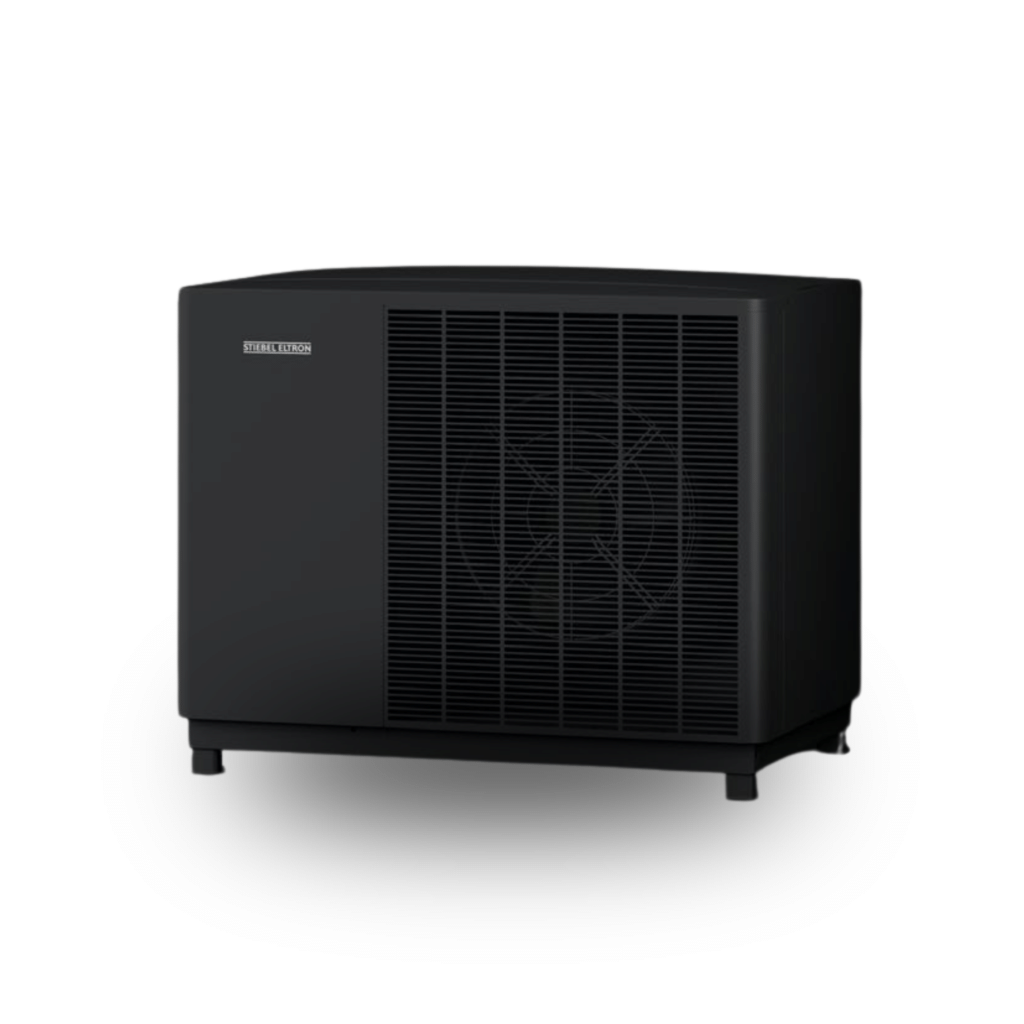
Stiebel Eltron is a German manufacturer established in 1924, specialising in heating, hot water and renewable energy technology.
Its HPA-O Plus range is designed to provide efficient heating and hot water for a variety of properties, including existing homes and new builds.
The range uses the natural refrigerant R290 and can deliver heating flow temperatures of up to 75°C, making it suitable for consideration in properties with radiators as well as underfloor heating.
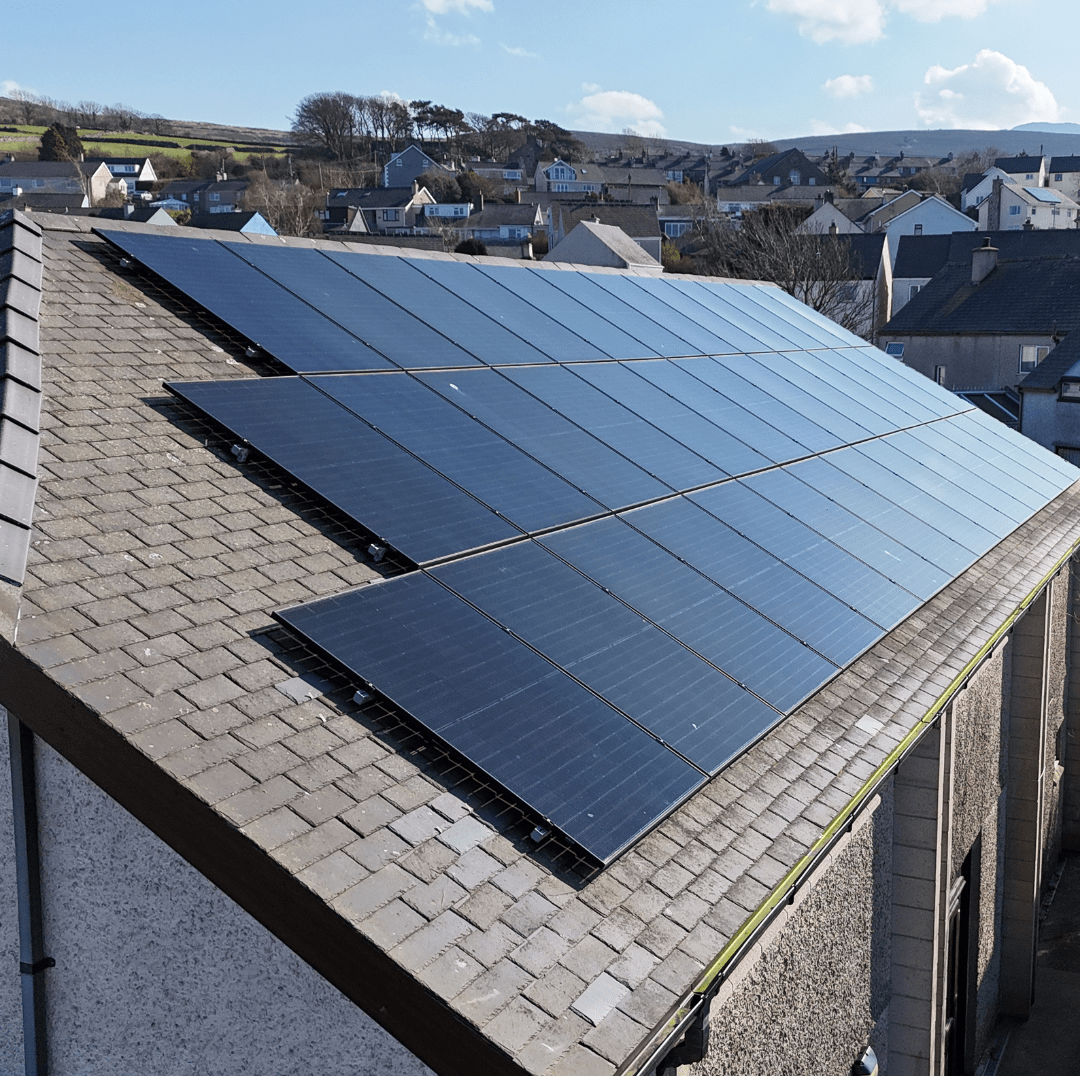
The HPA-O Plus range also offers optional cooling functionality and integration with solar PV systems, subject to the overall system design.
Vaillant
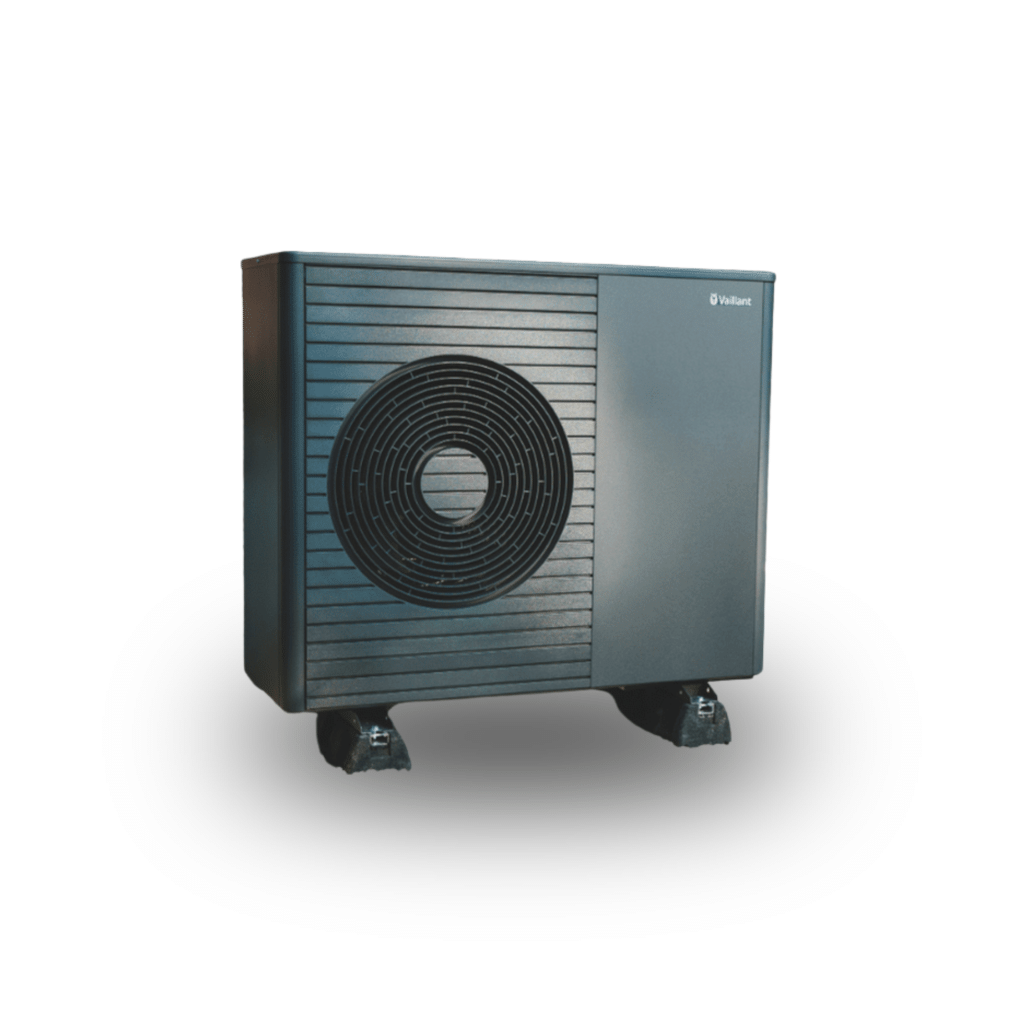
Vaillant is another German heating manufacturer, established in 1874. The company is widely recognised for its boilers but also develops air source and ground source heat pump systems.
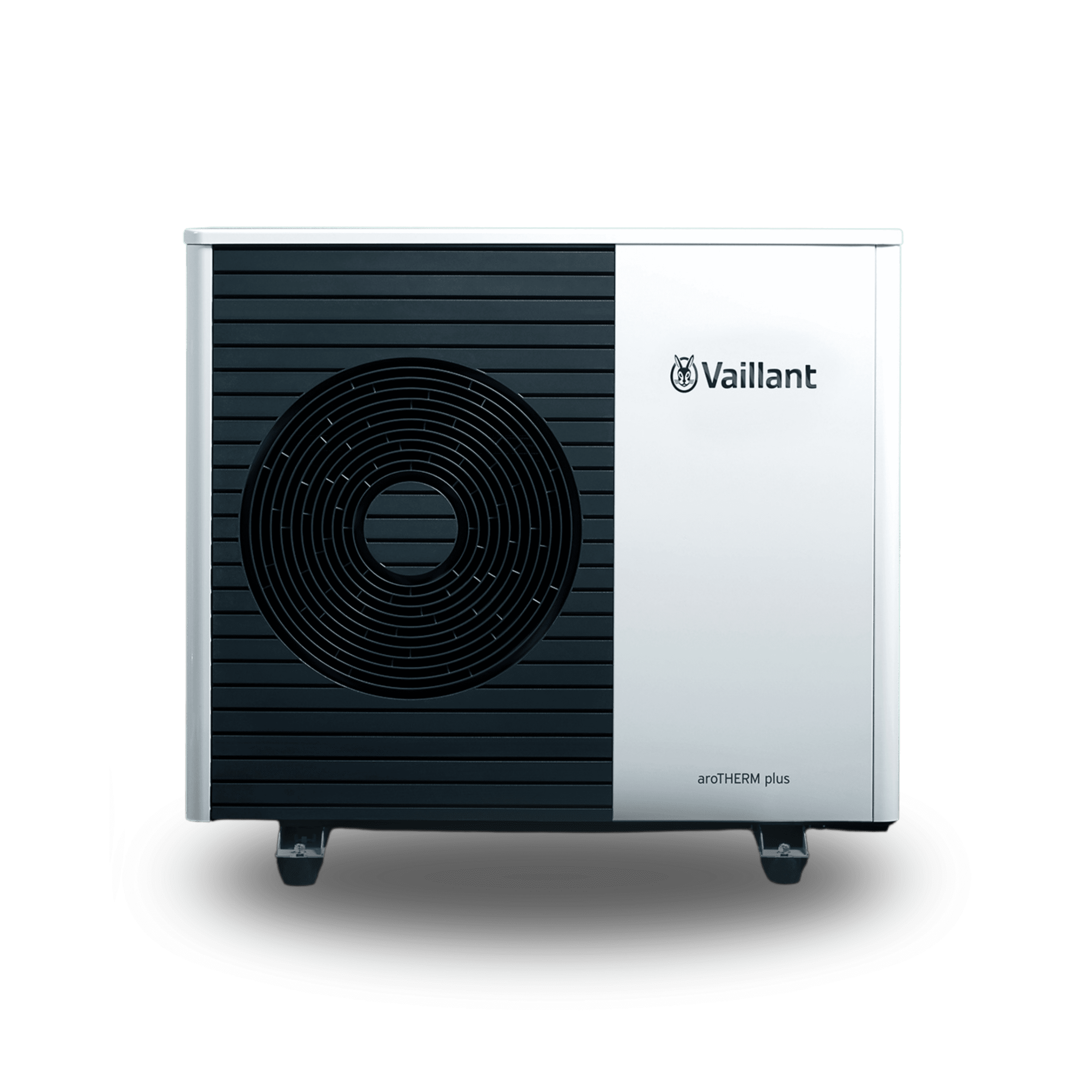
The new aroTHERM plus is Vaillant’s latest generation of air-to-water heat pumps, designed for domestic heating and hot water.
According to Vaillant, the updated range offers improvements in efficiency, noise performance and installation flexibility compared with its previous models.
It also features a redesigned anthracite exterior and compatibility with the myVaillant app, allowing homeowners to manage their heating through connected controls.
Stiebel Eltron vs Vaillant: At a glance
Both manufacturers offer modern air source heat pumps, but their features and specifications vary depending on the model selected.
| Feature | Stiebel Eltron HPA-O Plus |
New Vaillant aroTHERM plus |
|---|---|---|
| Manufacturer origin | Germany | Germany |
| Heating and hot water | Yes | Yes |
| Refrigerant | R290 | R290 |
| Energy efficiency | Up to A+++ | Up to A+++ |
| Maximum flow temperature | Up to 75°C | Up to 75°C |
| Heating controls |
|
|
| Design | Dark grey outdoor unit | Anthracite outdoor unit |
| Noise – model specified |
HPA-O 07.2 Plus: 43 dB(A) HPA-O 10.2 Plus: 46 dB(A) |
VWL 85/8.1 S3: 46.8 dB(A) VWL 105/8.1: 49.9 dB(A) |
| Manufacturer warranty |
2 years standard; up to 7 years extended* |
2 years standard; up to 7 years extended* |
*Extended warranties are subject to manufacturer eligibility criteria, registration and applicable terms and conditions.
Noise figures are manufacturer-published sound power levels for the models specified. Figures may be measured under different operating conditions and should not be treated as a direct noise ranking. Specifications and control compatibility vary by model.
1. Efficiency
One of the most important considerations when choosing a heat pump is how efficiently it can heat your home.
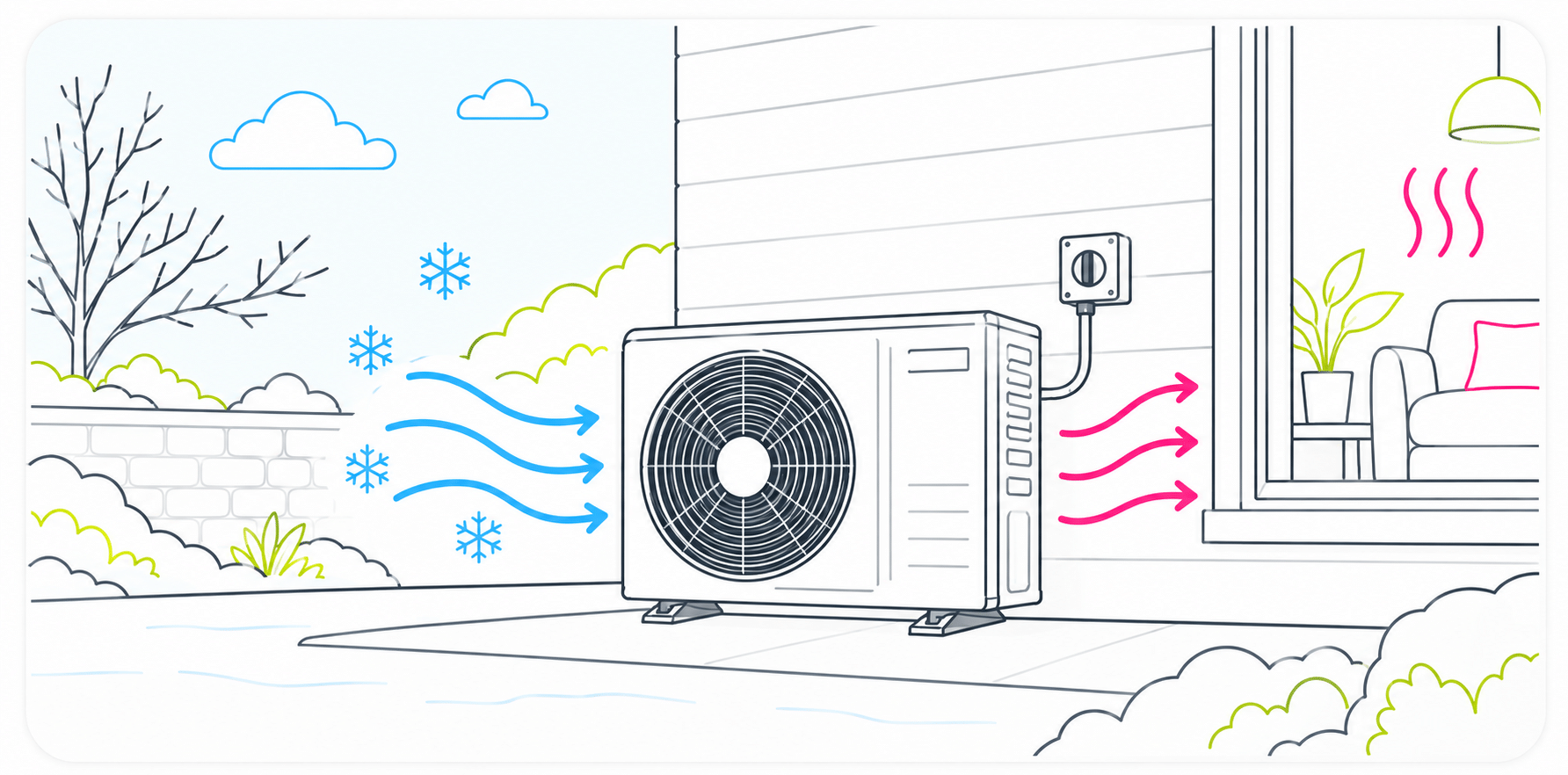
Unlike a traditional boiler, which generates heat by burning fuel, an air source heat pump transfers heat from the outside air into your heating system. This allows it to deliver several units of heat for every unit of electricity consumed.
Heat pump efficiency is commonly measured using two figures:
-
COP (Coefficient of Performance): Measures efficiency under specific operating conditions. For example, a COP of 4 means the heat pump produces 4 kWh of heat for every 1 kWh of electricity used.
-
SCOP (Seasonal Coefficient of Performance): Estimates efficiency across a heating season, accounting for changes in outdoor temperature and heating demand.
How do Stiebel and Vaillaint compare?
Both manufacturers offer highly efficient heat pumps, with relatively small differences in their published seasonal performance figures.
For example, Stiebel’s HPA-O 10.2 Plus HC 230 has a published SCOP of 4.96 at a 35°C flow temperature and 3.99 at 55°C.
Vaillant’s new aroTHERM plus VWL 105/8.1 has a published SCOP of 5.13 at 35°C and 3.86 at 55°C.
This means Vaillant has a slightly higher published seasonal efficiency at 35°C, while Stiebel performs slightly better at 55°C, based on these particular models and figures.
However, these figures are calculated under standardised test conditions and don’t necessarily reflect the efficiency homeowners will achieve in practice.
Factors such as outdoor temperature, heating flow temperature, property heat loss and system design all influence real-world performance. For example, operating at a lower flow temperature generally improves efficiency and reduces electricity consumption.
Ultimately, how well a heat pump is designed, installed and configured can be more important than small differences in manufacturers’ published efficiency ratings.
Some of the most important considerations include accurate heat loss calculations, correct heat pump sizing, suitable radiators or underfloor heating, and effective heating controls.
2. Heating performance and colder weather
A common question among homeowners is whether a heat pump can provide enough warmth during the colder winter months.
Both Stiebel’s HPA-O Plus and Vaillant’s new aroTHERM plus ranges are designed to operate in outdoor temperatures as low as −25°C, with models capable of delivering flow temperatures of up to 75°C.
This makes both ranges suitable for consideration in colder climates, although the heating output and efficiency will vary depending on outdoor conditions and the selected model.
Higher flow temperatures can provide additional flexibility, particularly in older properties where existing radiators may require warmer water to meet the home’s heating demand. However, higher temperatures generally reduce heat pump efficiency, which is why systems should be designed to operate at the lowest practical flow temperature.
Another important consideration is the heat pump’s output in colder conditions.
For example, Stiebel’s HPA-O 10.2 Plus HC 230 has a published heating output of 10.07 kW at an outdoor temperature of -7°C and a heating water temperature of 35°C.
These figures show that both models can deliver substantial heating output in cold weather, although differences in testing and operating conditions should be considered when comparing manufacturers.
Ultimately, the manufacturer’s performance data must be assessed alongside the property’s calculated heat loss, rather than selecting a heat pump based solely on its advertised output.
3. Cooling
One feature you might not have considered when choosing a heating system is cooling. After the unusually hot temperatures we’ve experienced this summer, the ability to keep your home comfortable during warmer weather could become an increasingly attractive benefit.
Both Stiebel Eltron and Vaillant offer heat pumps with cooling capabilities, although there are differences in how they’re enabled.
The Stiebel Eltron HPA-O Plus has reversible cooling functionality built in, whereas Vaillant’s aroTHERM plus requires an additional cooling accessory.
However, whether your home can benefit from cooling depends on the overall system design. Standard radiators aren’t generally suitable for effective cooling, so compatible underfloor heating or fan coil units may be needed.
4. Noise levels and outdoor unit design
As air source heat pumps are installed outside the property, noise levels and the appearance of the outdoor unit are important considerations.
Both Stiebel Eltron and Vaillant have developed systems with quieter operation in mind.
Stiebel’s HPA-O Plus range includes models with sound power levels of 43 dB(A) for the 07.2 Plus and 46 dB(A) for the 10.2 Plus, according to the manufacturer’s published specifications.
Vaillant describes its new aroTHERM plus as its quietest air-to-water heat pump range yet, with published sound power levels of 46.8 dB(A) for the VWL 85/8.1 S3 (8 kW class) and 49.9 dB(A) for the VWL 105/8.1 (10 kW class), measured at A7/W55 under standardised test conditions.
These figures shouldn’t be compared directly, as the sound produced varies between different heat pump sizes and operating conditions.
It’s also important to distinguish between sound power, which describes the sound energy produced by the equipment, and sound pressure, which describes the noise experienced at a particular location.
The position of the outdoor unit, distance from neighbouring properties and surrounding surfaces can all influence how noticeable the heat pump is.
5. Appearance
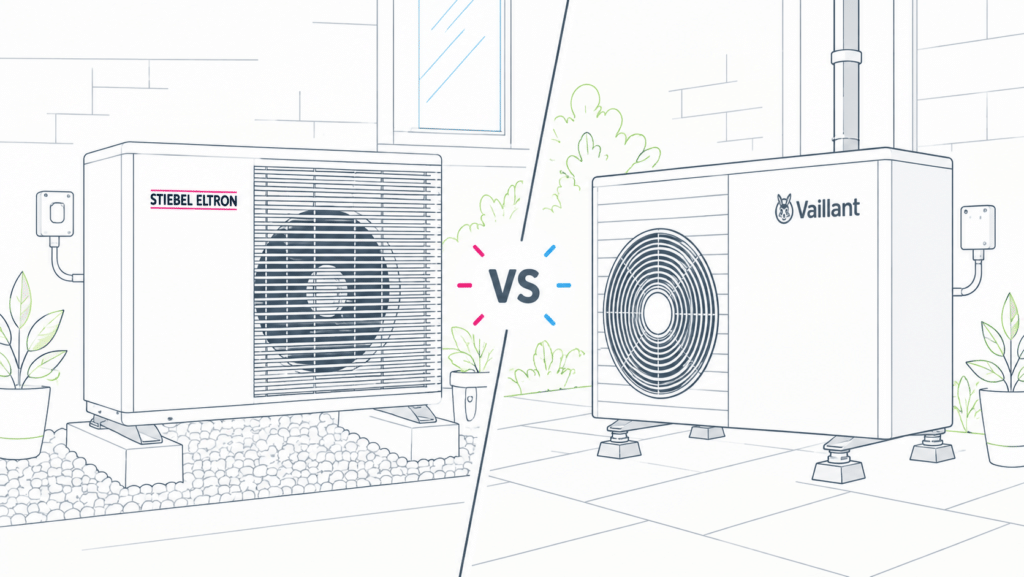
Both manufacturers offer contemporary outdoor units with dark exterior finishes.
Stiebel’s HPA-O Plus has a dark grey finish, while Vaillant’s new aroTHERM plus features an anthracite design.
The dimensions and required installation clearances also vary between models, so the available outdoor space will influence which system can be installed.
Ultimately, when it comes to appearance, the choice between Stiebel and Vaillant largely comes down to personal preference. Both offer modern designs, so it’s a matter of which you feel would best complement your property.
Stiebel Eltron
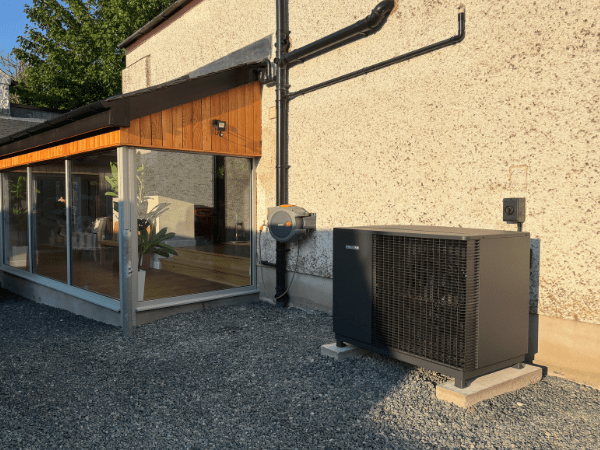
Stiebel Eltron HPA-O Plus
Vaillant
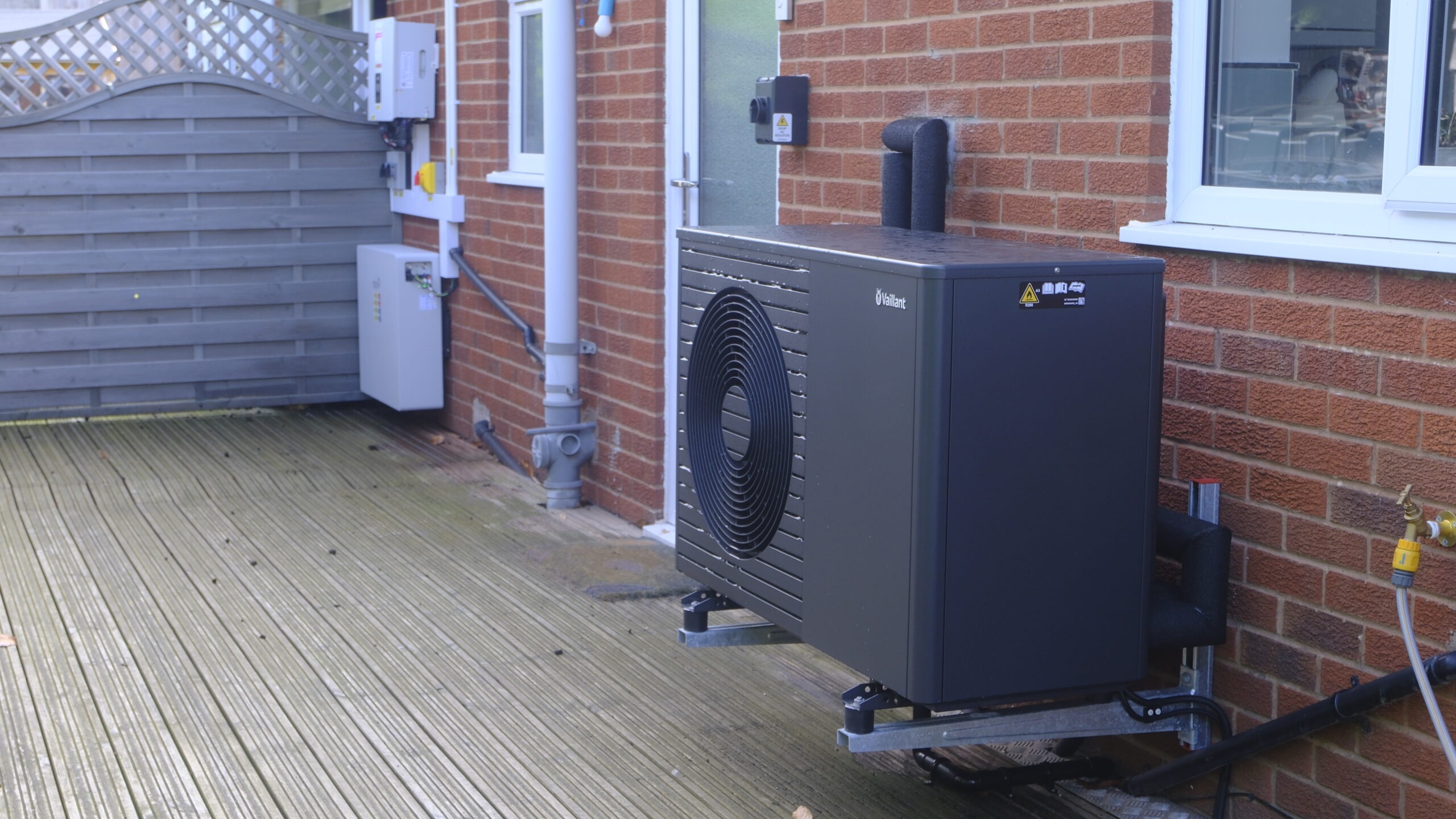
Vaillant aroTHERM plus
6. Heating controls and smart monitoring
Although both manufacturers offer smart heating controls, the way homeowners interact with their systems differs.
Stiebel Eltron controls
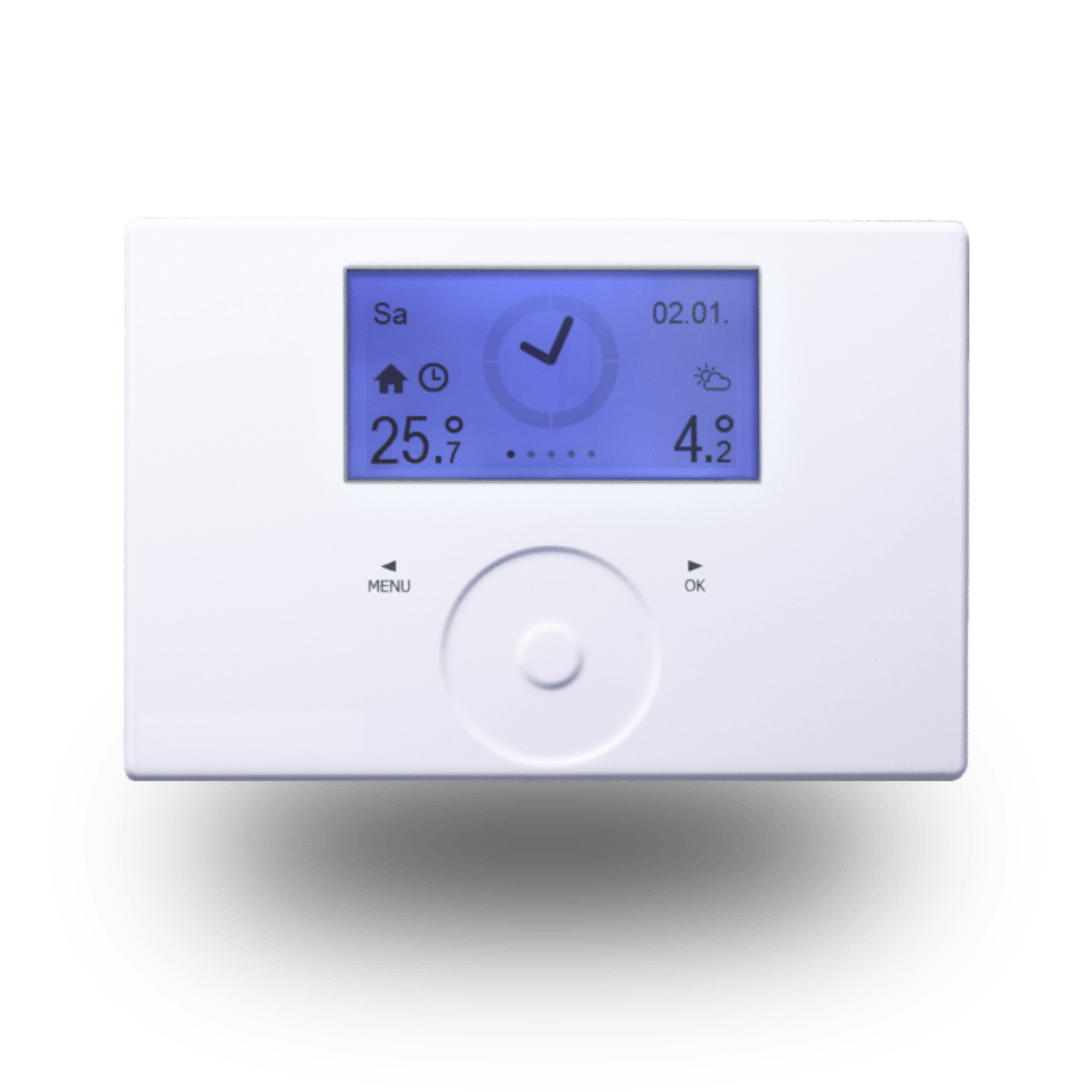
Stiebel heat pump systems can use several components to manage heating and hot water.
The Heat Pump Manager (WPM) manages the technical operation of the heating system, while the FET room controller provides a more accessible way for homeowners to adjust their desired room temperature.
Stiebel also offers the Internet Service Gateway (ISG), which connects compatible heat pump systems to its digital services.
With the MyStiebel app, homeowners can access functions including heating and hot water settings, temperature adjustments, schedules and holiday modes. Some functions require additional compatible equipment and connectivity.
Vaillant controls
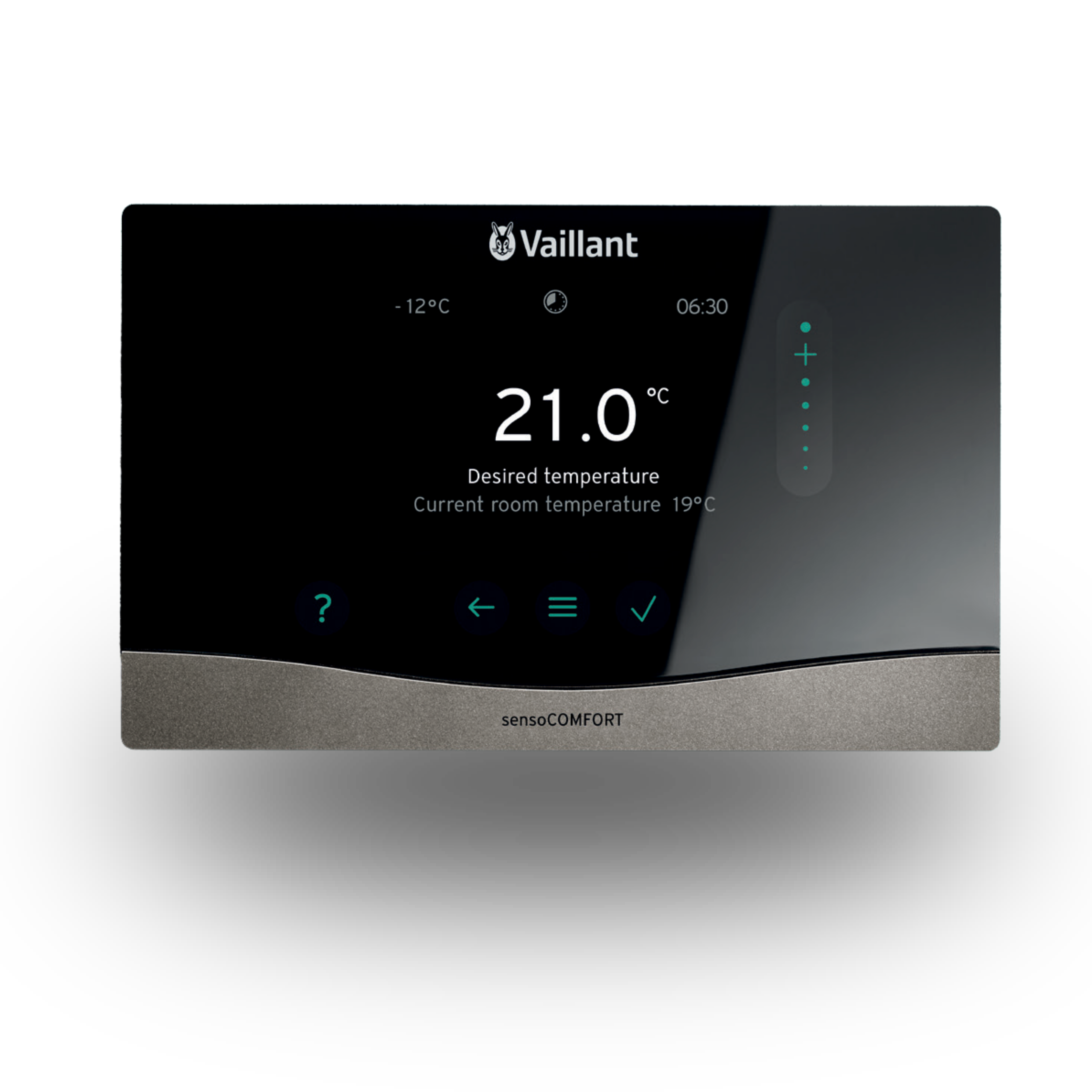
Vaillant’s new aroTHERM plus can be paired with its sensoCOMFORT controller, which allows homeowners to manage their heating and hot water settings.
For connected functionality, the myVAILLANT connect internet gateway provides access to the myVaillant app.
Through the app, homeowners can adjust desired temperatures, manage heating schedules and view energy consumption information.
Both manufacturers offer options for managing heating through physical controls and connected devices.
In terms of everyday use, Vaillant’s controls may feel slightly more intuitive for some homeowners, while Stiebel’s system can take a little more time to become familiar with due to its different control components.
However, Stiebel’s controls are designed to be configured by the installer during installation, with settings tailored to the property to help the heat pump operate as efficiently as possible. Once set up correctly, homeowners should rarely need to adjust these settings, other than making occasional changes to their preferred room temperature.
| Capability | Stiebel Eltron WPM / ISG |
Vaillant sensoCOMFORT / myVAILLANT |
|---|---|---|
| Everyday Heating Controls | ||
| Heating and hot water schedules | Yes | Yes |
| Weather compensation | Yes | Yes |
| Holiday and reduced-energy modes | Yes | Yes |
| Smartphone control | MyStiebel app | myVaillant app |
| Multiple heating zones | Yes | Yes |
| Advanced Controls & Monitoring | ||
| Installer remote monitoring | Yes, with compatible connectivity | Yes, with compatible connectivity |
| Multiple heat pumps in one system | WPM cascade support | Depends on system configuration |
| Advanced smart-home integration | Modbus TCP/IP via compatible ISG interface | EEBUS via compatible connectivity |
| Room humidity and dew-point monitoring | Available with compatible FET controls | Depends on controller and sensors |
| Solar PV & Energy Management | ||
| Solar PV integration | Yes | Yes |
| Use surplus solar electricity to run the heat pump | Yes, with suitable integration | Yes, with suitable integration |
| Automatically heat hot water when solar generation is high | Yes, with compatible energy management | Yes, through EnergyPLUS or EEBUS |
| Store surplus solar energy as heat in a buffer cylinder | Yes, with suitable configuration | Yes, through compatible EEBUS integration |
| Solar-triggered heating optimisation | Yes, through compatible SG Ready or energy management integration | Available with compatible EEBUS integration; EnergyPLUS currently focuses on hot water |
| Solar optimisation without additional control wiring | Depends on system configuration | Available for hot water through EnergyPLUS |
Please note: These are capabilities of the wider manufacturer control systems and may not be included with every heat pump installation. Some features require additional gateways, compatible solar equipment, optional services or specific system configurations.
6. Managing Multiple Heating Zones
For homes with different heating zones, such as underfloor heating downstairs and radiators upstairs, both manufacturers offer controls to manage these separately.
Stiebel Eltron’s WPM controller can manage several heating circuits as standard, while Vaillant’s sensoCOMFORT system may require additional control modules, depending on the setup.
This can make Stiebel’s controls particularly useful for more complex heating systems, although both manufacturers can accommodate multi-zone installations.
7. Warranty, servicing and aftercare
A heat pump is a long-term investment, so the support available after installation is another important consideration.
Both Stiebel Eltron and Vaillant provide manufacturer warranties, although the length and conditions of cover differ.
Stiebel Eltron
Stiebel Eltron’s published UK heat pump warranty terms describe two years of standard parts and labour cover, with an additional five years available when certain conditions are met.
These include installation by an appropriately trained partner, eligible system components, registration and a connected Internet Service Gateway for remote monitoring.
The manufacturer also requires evidence of appropriate maintenance when making warranty claims.
Vaillant
Vaillant’s new aroTHERM plus comes with a two-year standard guarantee, with the option of extending cover up to seven years.
Eligibility depends on factors including the installer, registration and the installation of an eligible Vaillant hot water cylinder. Additional charges may apply in certain circumstances.
Why aftercare matters
Regardless of manufacturer, regular servicing and access to technical support are important considerations.
Both companies provide manufacturer support, but it’s also worth understanding what your installer offers once the installation is complete.
At Menai, our support doesn’t end once your heat pump is installed. We provide ongoing aftercare and servicing to help customers understand their systems, maintain their equipment and keep their heating operating efficiently.
7. Which heat pump is right for your home?
So, is Stiebel Eltron or Vaillant the better choice?
Historically, Stiebel Eltron has been at the forefront of heat pump technology, but other manufacturers, including Vaillant, have made significant advances in recent years. As this comparison shows, there are differences between the two, but they aren’t necessarily substantial.
Ultimately, how well a heat pump is designed, installed and configured for your property is often more important than the manufacturer itself.
At Menai, we go the extra mile to ensure every system is carefully designed for maximum efficiency. From detailed heat loss calculations and correct system sizing to optimising flow temperatures and heating controls, our focus is on helping you get the best possible performance from whichever manufacturer you choose.
Not sure which heat pump is right for your home?
Whether you prefer Stiebel Eltron or Vaillant, we’re here to help you make an informed decision. Our team will assess your property’s heating requirements, explain your options and design a system tailored for maximum efficiency.
Explore renewables
Find out more about the renewable energy solutions we offer.
Air Source Heat Pumps
Solar Panels
Battery Storage

Electric Vehicle Chargers
Air Source Heat Pumps
Solar Panels
Battery Storage