
Heat Pump Efficiency Explained
Have you ever wondered why people talk so much about heat pump efficiency? Or what people mean when they mention SCOP?
The truth is, the efficiency of your heat pump can have a significant impact on how much it costs to heat your home. A well-designed, well-installed system can produce much more heat than the electricity it uses, helping to keep your energy bills as low as possible.
Let’s take a closer look.
Why is heat pump efficiency important?
Unlike a traditional boiler, a heat pump doesn’t generate heat by burning fuel. Instead, it moves heat from the outside air into your home.
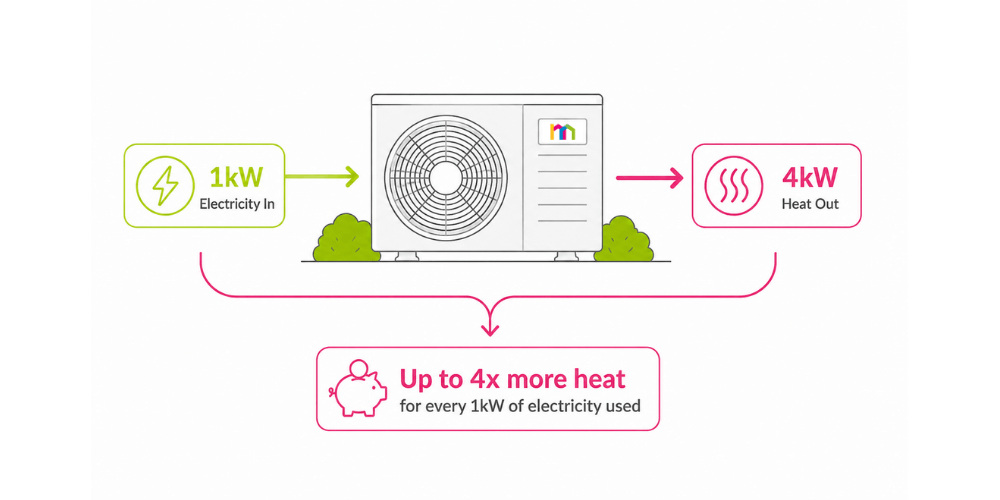
Because it’s transferring heat rather than creating it, a heat pump can produce several units of heat for every unit of electricity it consumes.
For example:
- 1 kWh of electricity in
- Around 4 kWh of heat out
Think of it like this: if electricity cost you £1, a heat pump operating at a SCOP of 4.0 could deliver approximately £4 worth of heat from that £1 of electricity.
The more efficiently your system operates, the more heat you receive for every unit of electricity you buy.
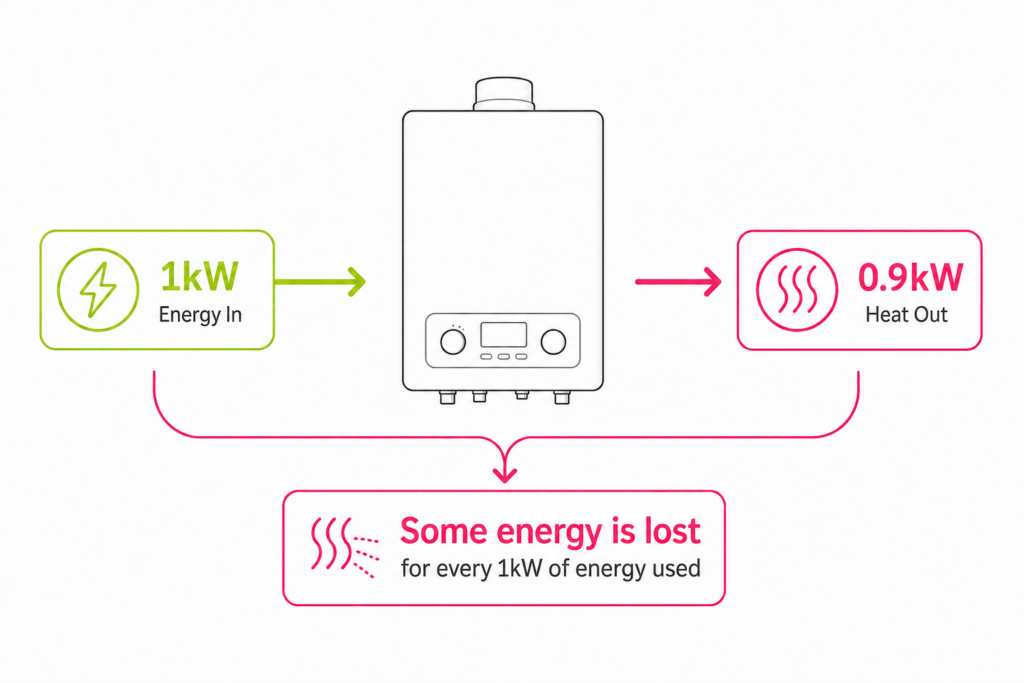
Compare this with a typical oil or LPG boiler which is rated at around 90% efficiency.
This means that for every 1 kWh of fuel used, approximately 0.9 kWh is converted into usable heat, while the remaining energy is lost, mainly through the flue.
What is SCOP?
SCOP stands for Seasonal Coefficient of Performance.
It’s a measure of how efficiently a heat pump performs over an entire heating season, rather than at a single point in time.
For example:
- SCOP 3.0 = 1 kWh of electricity produces around 3 kWh of heat.
- SCOP 4.0 = 1 kWh of electricity produces around 4 kWh of heat.
- SCOP 5.0 = 1 kWh of electricity produces around 5 kWh of heat.
A higher SCOP means your heat pump needs less electricity to provide the same amount of heating, helping to reduce running costs and lower your carbon emissions.
It’s important to remember that every home is different, so the SCOP achieved in practice will depend on how the system has been designed, installed and operated.
What is SPF?
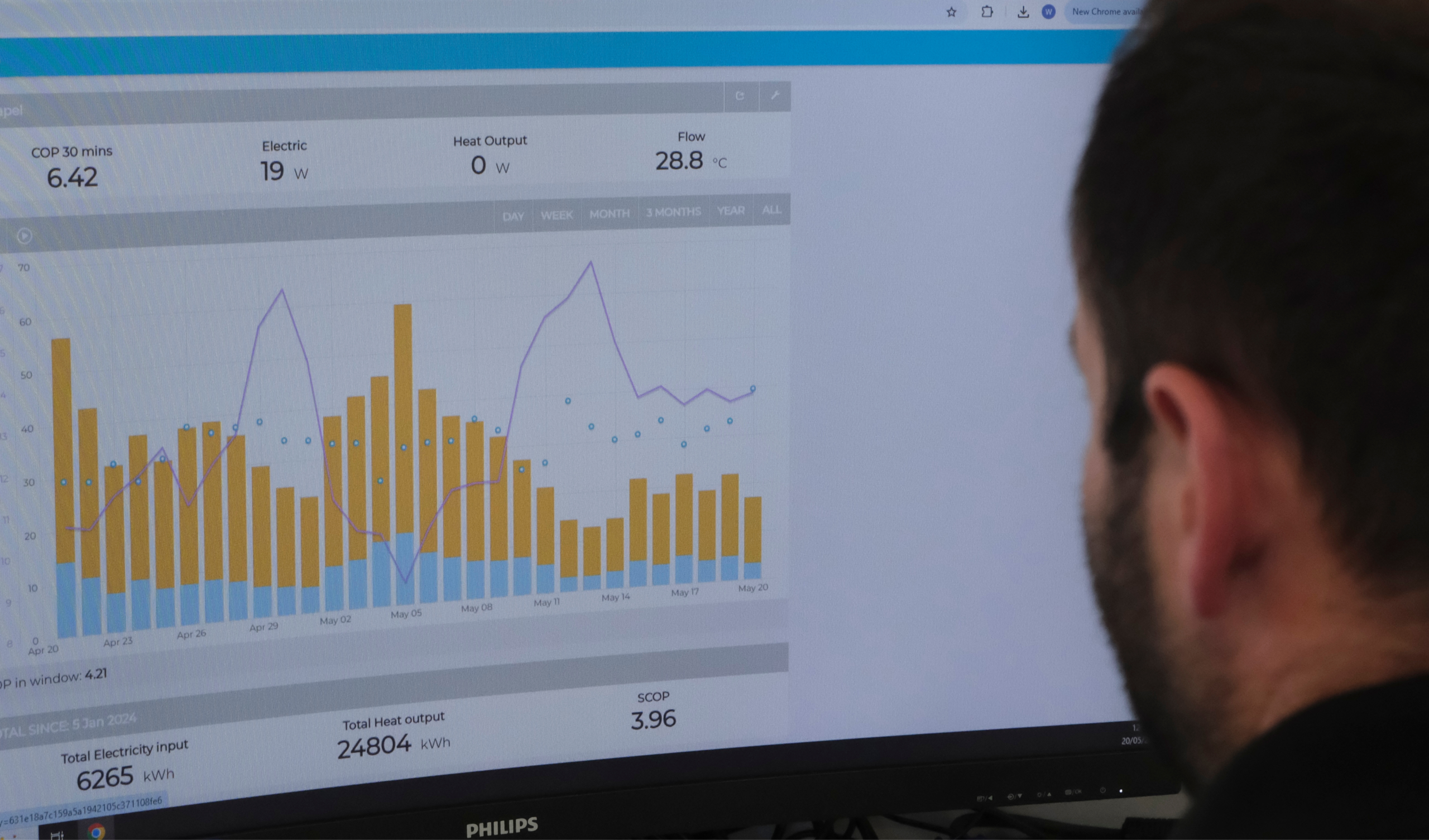
The Seasonal Performance Factor (SPF) measures how efficiently a heat pump performs in a real home over an entire heating season. Unlike SCOP, which is based on standardised laboratory testing, SPF reflects the system’s actual performance in everyday use.
It takes into account factors such as:
- Local weather conditions
- The home’s heat loss and insulation levels
- The quality of the system design and installation
- How the heating system is used and controlled
As a general guide, well-designed systems typically achieve:
- Air source heat pumps: SPF of around 2.8–3.5
- Ground source heat pumps: SPF of around 3.2–4.0
Because SPF is measured under real-world conditions rather than controlled test conditions, it is often lower than the manufacturer’s quoted SCOP value.
What affects a heat pump's efficiency?
The heat pump itself is only one part of the equation. A premium heat pump installed incorrectly may perform worse than a more modest model that has been carefully designed.
Some of the biggest factors affecting efficiency include:
- Heat loss calculations
Every property loses heat differently. Carrying out a detailed room-by-room heat loss calculation ensures the system is correctly sized and can operate efficiently throughout the year.
- System design
Pipework, emitter sizing, hot water design and flow temperatures all influence how efficiently the heat pump operates.
- Radiators or underfloor heating
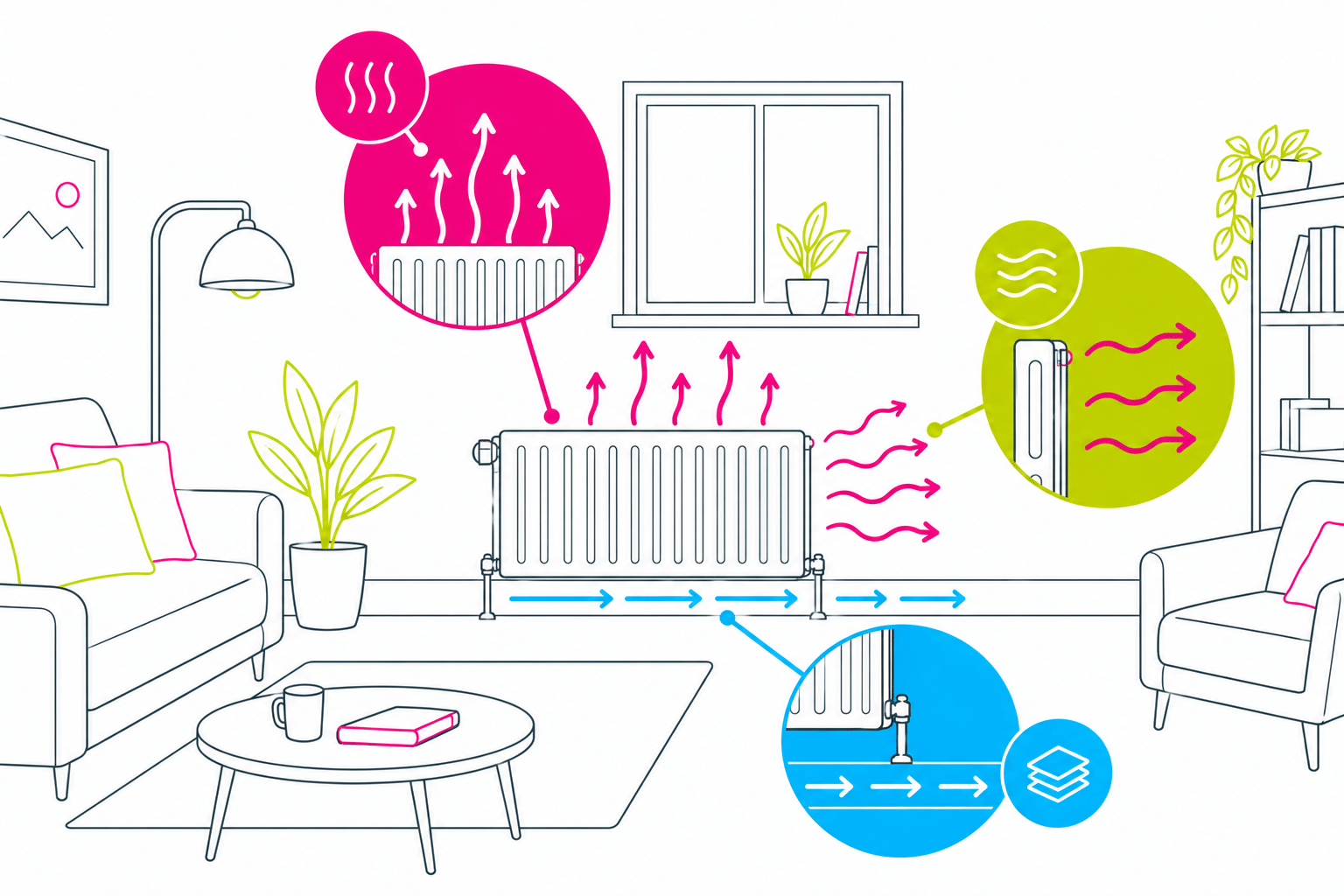
Heat pumps work most efficiently at lower flow temperatures. Correctly sized radiators or underfloor heating allow the system to deliver enough warmth without working harder than necessary.
- Controls and settings
Weather compensation, heating schedules and control settings all play an important role in maintaining efficiency while keeping your home comfortable.
- Installation quality
Even the best equipment won’t achieve its potential if it’s poorly installed or commissioned. Correct commissioning ensures everything operates as intended from day one.
- Ongoing optimisation
Performance doesn’t stop on installation day. Monitoring how a system performs in the real world allows settings to be fine-tuned, helping maintain comfort while improving efficiency over time.
Why Menai focuses on performance
At Menai, we don’t just install heat pumps, we engineer systems to perform.
Every installation begins with detailed heat loss calculations and bespoke system design. Once installed, we use real-world performance data to monitor and optimise your system, helping it achieve the best possible efficiency throughout its lifetime.
Our aim isn’t simply to fit a heat pump, it’s to help you get the most heat from every unit of electricity you buy.