
You turn the heating on; the house gets warmer. It seems simple enough.
But there’s much more happening behind the scenes.
Understanding that journey can help explain why some homes are easier to keep warm than others, why the design of a heating system matters, and why keeping heat in your home can be just as important as producing it in the first place.
So, let’s follow the hidden journey of heat through your home.
Step 1: Heat enters the heating system
The journey starts with your heating system.
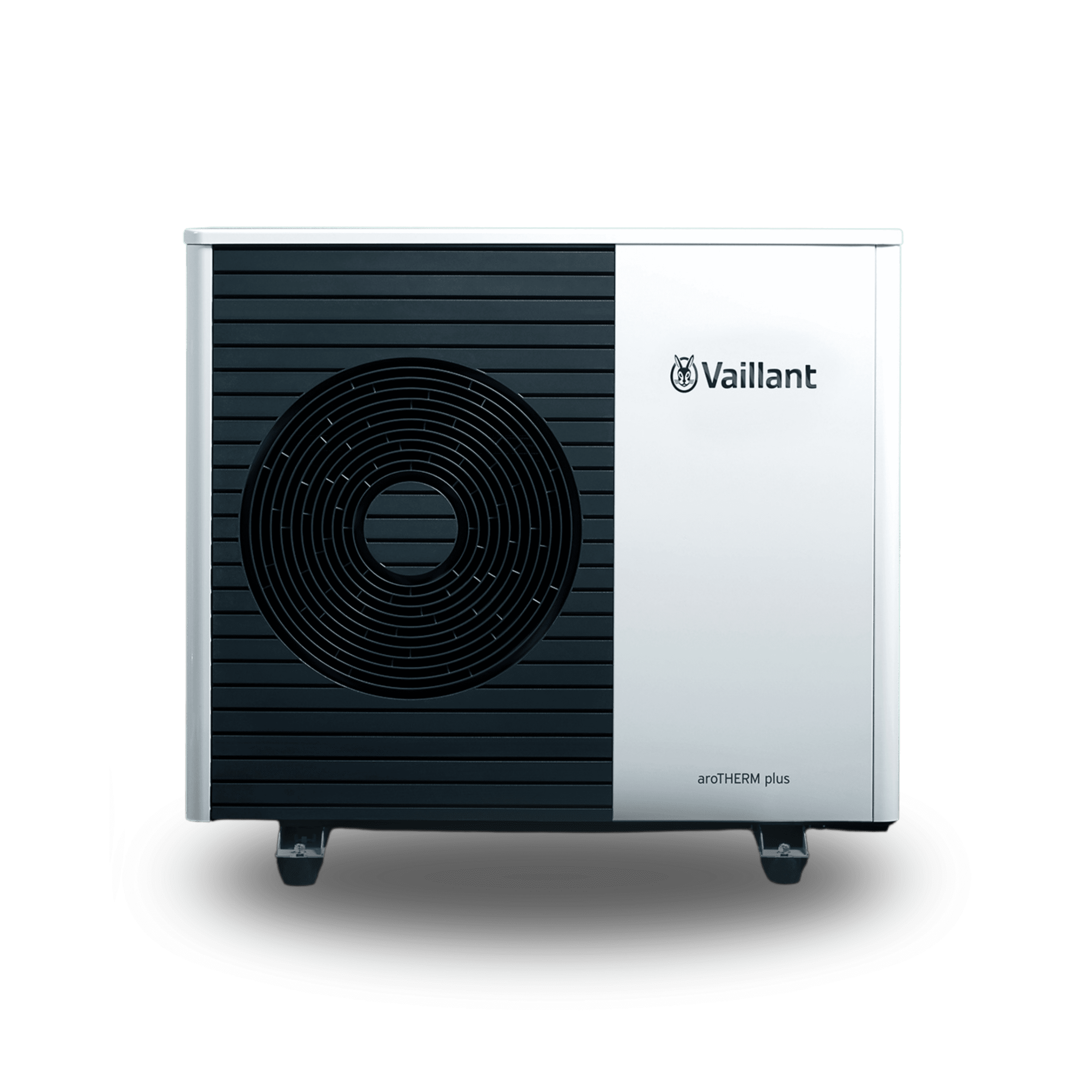
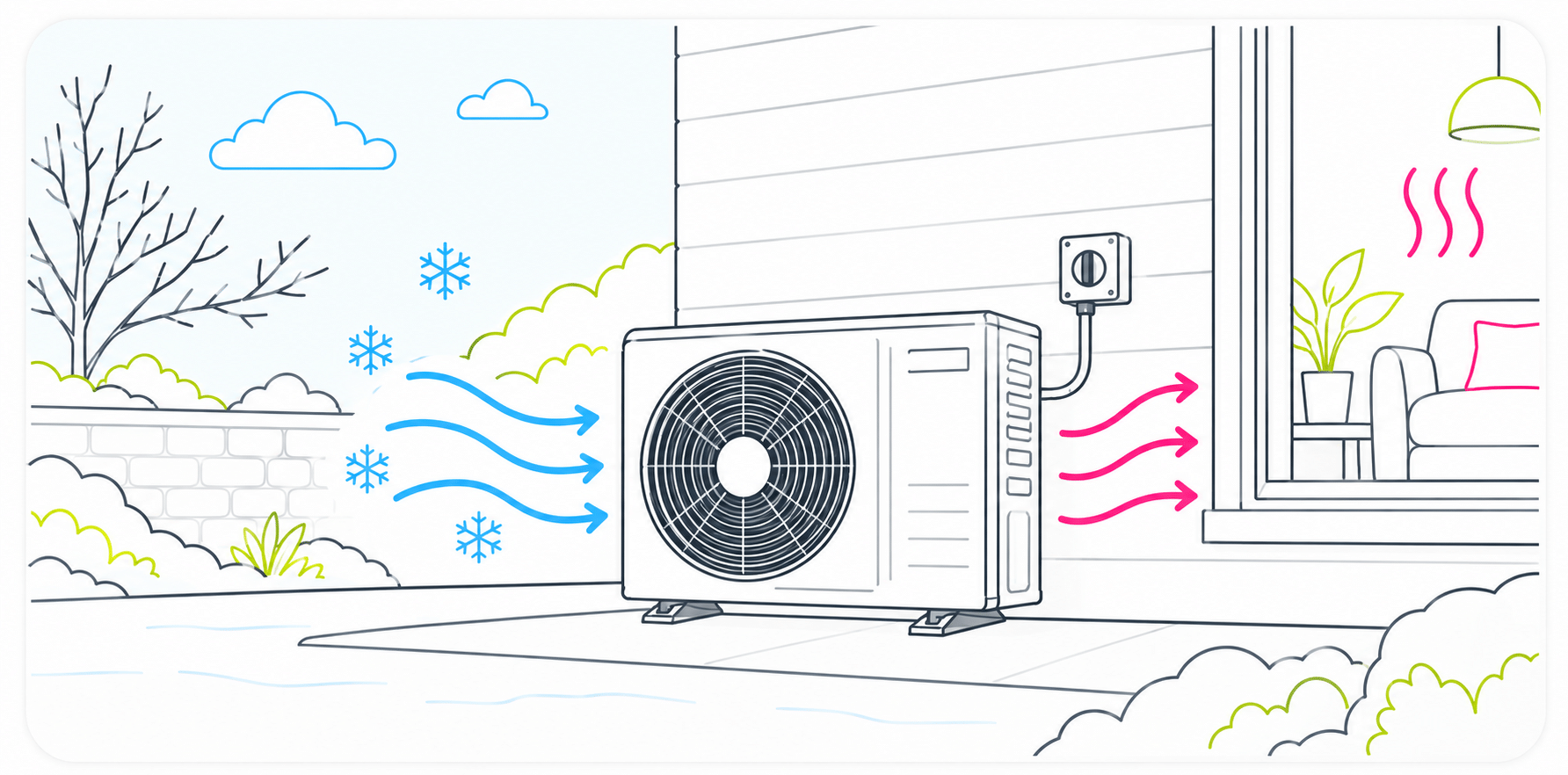
A gas or oil boiler releases heat by burning fuel. Direct electric heating converts electrical energy into heat. An air source heat pump works differently again, using electricity to transfer heat already present in the outside air into your heating system.
Whichever system you have, though, getting useful heat into your heating system is only the beginning.
Step 2: The heat needs to get where it's needed
In a wet central heating system, heated water travels through pipework before reaching heat emitters such as radiators or underfloor heating.
How much heat each room needs depends on how quickly that room is losing heat. This is affected by things such as its size, walls, floor, roof, windows and doors, air movement, and the difference between the indoor and outdoor temperature. The greater the heat loss, the more heat the heating system needs to replace to reach and maintain the temperature you’ve set your heating to.
That’s why radiators aren’t simply chosen to fit the available wall space. They need to be capable of giving off enough heat to meet the calculated heat loss of the room.
Radiator size matters because a larger radiator has more surface area to give off heat, so it can usually transfer more heat into the room. This is particularly important in heating systems that run at lower water temperatures, where a larger radiator may be needed to provide the same amount of heat.
Step 3: How does a radiator actually heat a room?
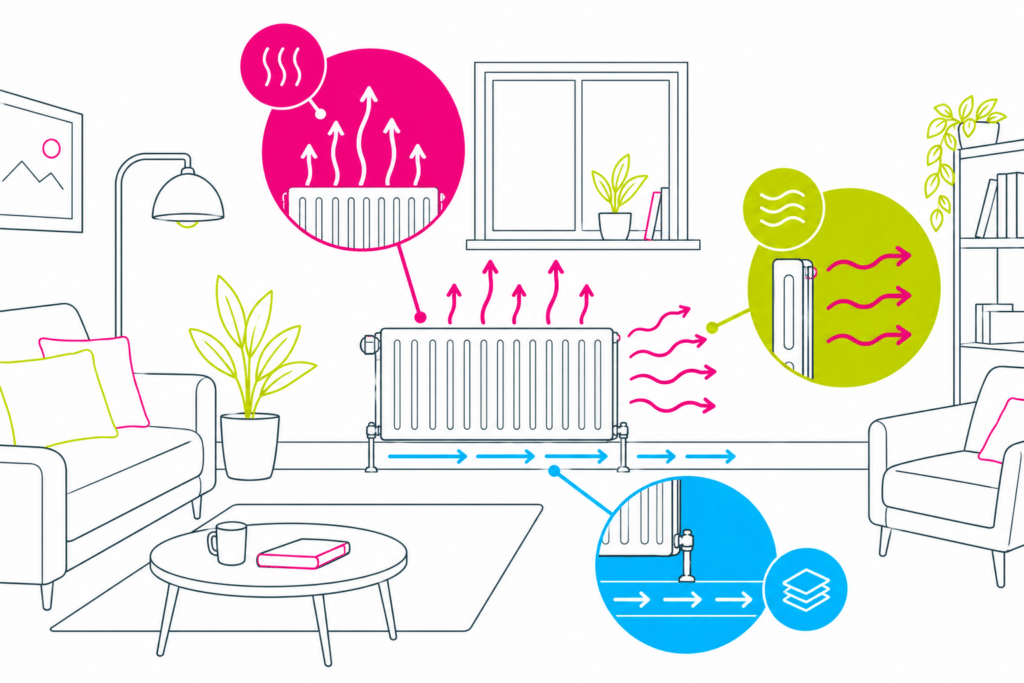
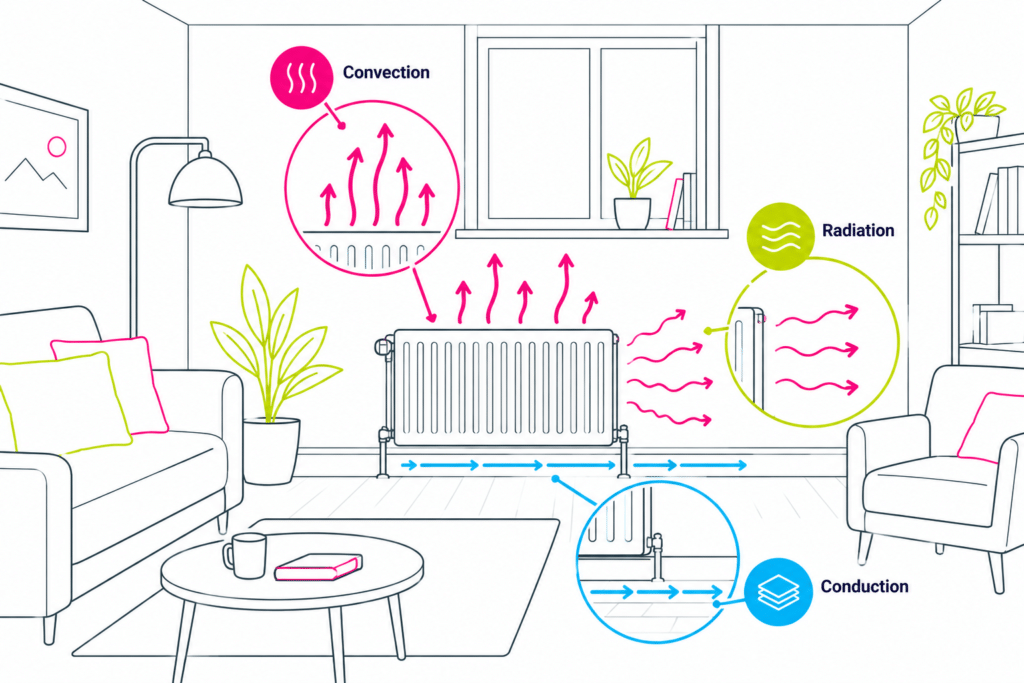
Once hot water reaches a radiator, heat begins transferring from the hotter radiator to its cooler surroundings in several ways.
Convection warms the air next to the radiator. That warmer air becomes more buoyant and rises, while cooler air moves in to replace it, creating a continuous circulation of air.
Radiation transfers heat directly between the warm radiator and cooler surfaces, objects and people around it, without needing the air itself to carry that heat.
Conduction is heat transferring through materials that are in physical contact. It plays a relatively small role in spreading heat from a radiator around the room, but becomes much more important when we look at how heat travels through solid parts of your home, such as its walls, floors and roof.
Together, these processes mean a radiator isn’t simply warming the air around it. Heat is being transferred to the air, surfaces and objects around the room, gradually warming the space as a whole.
Step 4: You're not only heating the air
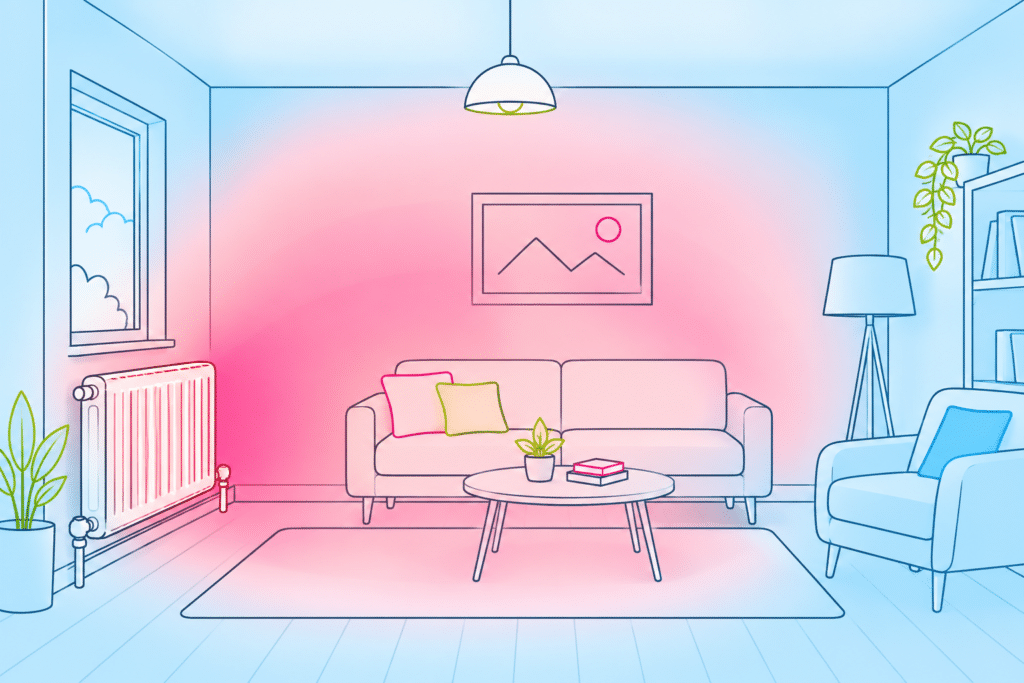
As we’ve seen, the heat from your radiator doesn’t just warm the air. It also transfers to the surfaces and objects around the room.
Walls, floors, ceilings, furniture and other materials warm up too, absorbing and temporarily storing some of the energy being supplied.
If you’ve ever walked into a property that hasn’t been heated for several days, you’ll probably recognise the difference. Even after the heating has been switched on and the air begins to warm, the room can still feel cold because the walls, floors and other surfaces around you are still cold.
The ability of materials within a building to absorb, store and later release heat is known as thermal mass.
This helps explain why putting the heating on for 20 minutes isn’t necessarily the same as properly warming your home. The air temperature might rise relatively quickly, but the building and its contents take time to warm too. If they’re still cold, they will continue to absorb heat from their warmer surroundings.
So, heating a home isn’t just about getting the air to a certain temperature. You’re warming an entire indoor environment, and how quickly that happens will depend partly on the materials within the building and how cold they were to begin with.
Step 5: Meanwhile, heat is making its way out
While you’re warming the inside of your home, it’s usually colder outside.
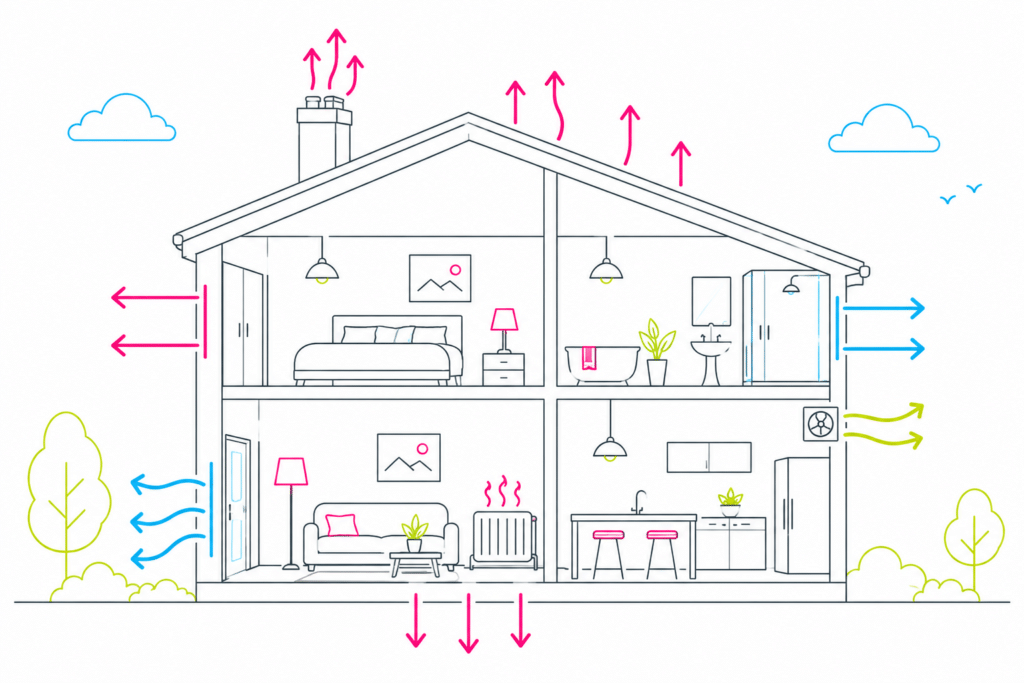
Heat naturally transfers from warmer areas towards colder ones, so that temperature difference continually drives heat from the warm interior towards the colder exterior.
Some of that heat passes through the building fabric; your walls, roof, floors, windows and doors. How readily each part transfers heat is described by its U-value: the lower the U-value, the less heat is transferred for a given area and temperature difference. This is why the construction and insulation of your walls, roof, windows and other parts of the building can make such a difference.
There can also be areas where heat transfers more readily, particularly around junctions such as where walls meet floors, roofs or windows. These are known as thermal bridges.
And not all heat leaves through solid parts of the building. Heat is also lost when warm indoor air is replaced by colder outdoor air, whether through uncontrolled gaps and draughts or through intentional ventilation, which is necessary to remove moisture and pollutants and maintain good indoor air quality.
Step 6: Your heating system is balancing what your home loses
This is where the whole journey comes together.
While your heating system is supplying heat, your home is simultaneously losing it. There can also be useful heat coming from elsewhere; people, appliances and sunlight through your windows all add small amounts of heat to the building.
If your home is losing heat faster than it is gaining and receiving it, the indoor temperature falls. If enough heat is supplied to balance those losses, the temperature can be maintained.
So your heating system isn’t simply heating your house to 20°C. Once you’re at that temperature, its job is essentially to replace the heat being lost quickly enough to keep you there.
Step 7: Why can two similar homes need very different amounts of heat?
Imagine two similar houses next door to each other. It’s the same temperature outside, and both households want their living rooms at 20°C.
Although the homes may look similar, they might not lose heat at the same rate. One could have better-insulated walls and roof, better-performing windows and less uncontrolled air leakage, meaning heat escapes more slowly. In the other, heat may transfer outside much more quickly.
To maintain the same 20°C indoor temperature, the second home therefore needs its heating system to replace heat at a faster rate. The greater the rate of heat loss, the more heat the heating system needs to supply to keep the room at the temperature you want.
This is what a heat loss calculation helps us work out. Rather than simply looking at the overall size of a house, it considers each room, its construction, ventilation and the difference between the indoor and outdoor design temperatures to calculate how much heat needs to be replaced.
The journey starts again
Heat inside your home is constantly moving.
Your heating system supplies it. Your pipework carries it. Your radiators or underfloor heating transfer it into your rooms. The air, surfaces and materials around you warm up, while at the same time heat is continually being lost through the building and through air movement.
To maintain the temperature you want, your heating system needs to keep replacing that lost heat at roughly the same rate. The faster your home loses heat, the more your heating system needs to supply.
And the journey continues.
Understanding home heating therefore means looking beyond the boiler, heat pump or radiator. It’s about the whole building working together, how heat is supplied, how it’s distributed, how your home responds to it and, ultimately, how well your home holds onto it.
Designed around your home
As you’ve just seen, every home loses heat differently. That’s why, as part of our heat pump surveys, we carry out a bespoke room-by-room heat loss calculation to help design a heating system around your home, not a one-size-fits-all solution.
Explore renewables
Find out more about the renewable energy solutions we offer.